
How We Work
We Use Sophisticated line
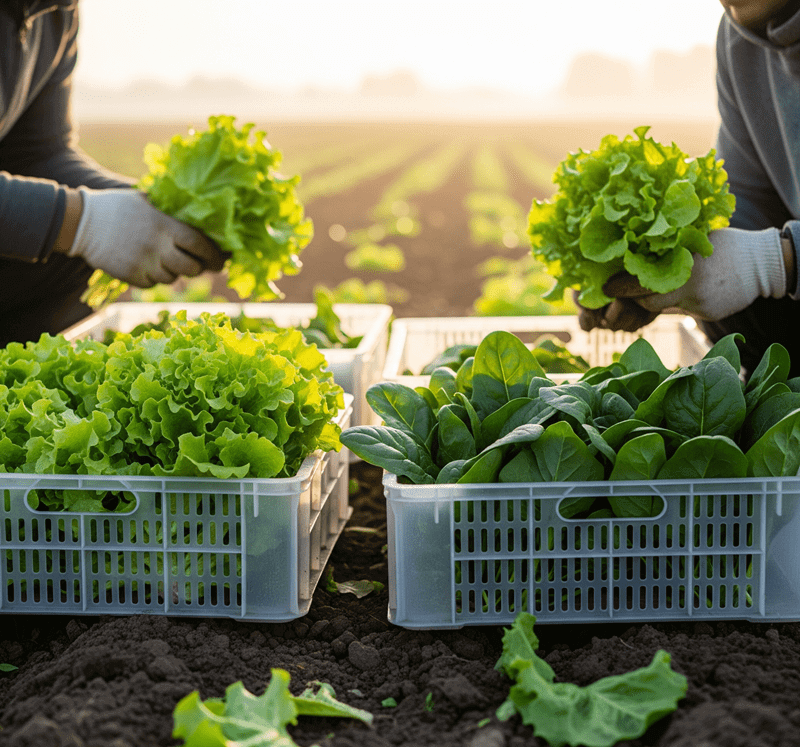
Harvesting and Raw Material Collection
The journey of packaged salad begins at the farm, where vegetables are carefully harvested at peak freshness. Timing is critical, as crops are picked early in the morning to preserve moisture and crispness. Farmers ensure only mature, high-quality produce is chosen. After collection, the vegetables are transported promptly to the processing facility in climate-controlled conditions to minimize wilting or damage. This step ensures the raw materials meet strict standards before entering the production line.
-
Hand or mechanical harvesting depending on crop type.
-
Sorting out damaged or immature produce at the field level.
-
Transportation in clean, cooled crates or containers.
-
Maintaining hygiene to reduce contamination risks.
Initial Cleaning and Quality Inspection
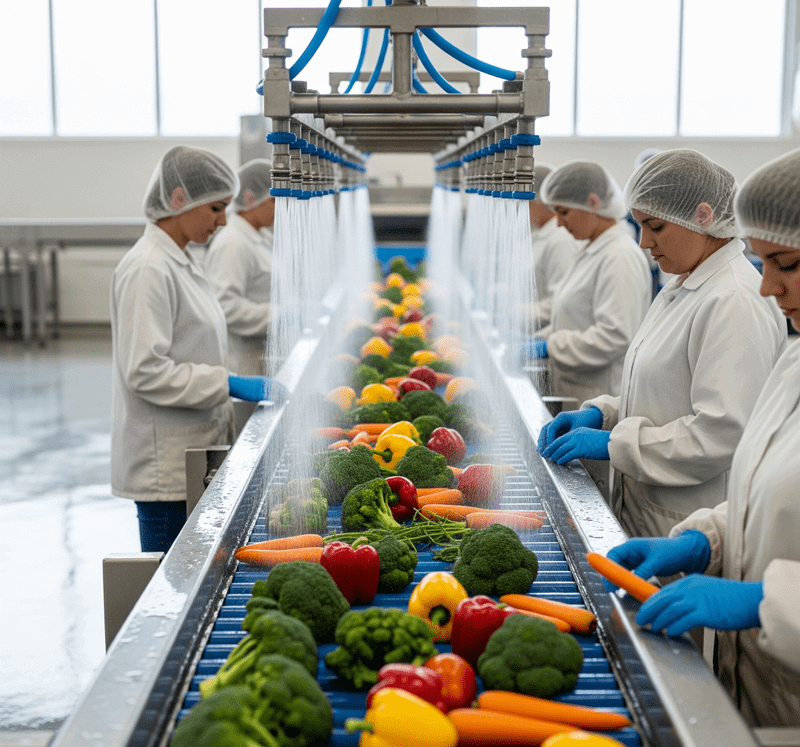
Upon arrival at the processing unit, vegetables undergo an initial cleaning stage. Here, dirt, soil, and field debris are removed through water sprays or dry brushing systems. At the same time, quality inspectors check for any foreign materials or inferior produce that may have slipped through initial sorting. This stage ensures only clean and safe raw vegetables enter the processing line, laying the foundation for food safety and consistent product quality.
-
Conveyor belts used for continuous inspection and cleaning.
-
Separation of unsuitable leaves or vegetables.
-
Water washing to remove soil, dust, and small insects.
-
Visual/manual quality checks and automated scanners.

Initial Cleaning and Quality Inspection
Upon arrival at the processing unit, vegetables undergo an initial cleaning stage. Here, dirt, soil, and field debris are removed through water sprays or dry brushing systems. At the same time, quality inspectors check for any foreign materials or inferior produce that may have slipped through initial sorting. This stage ensures only clean and safe raw vegetables enter the processing line, laying the foundation for food safety and consistent product quality.
-
Conveyor belts used for continuous inspection and cleaning.
-
Separation of unsuitable leaves or vegetables.
-
Water washing to remove soil, dust, and small insects.
-
Visual/manual quality checks and automated scanners.
Cutting, Washing, and Sanitization
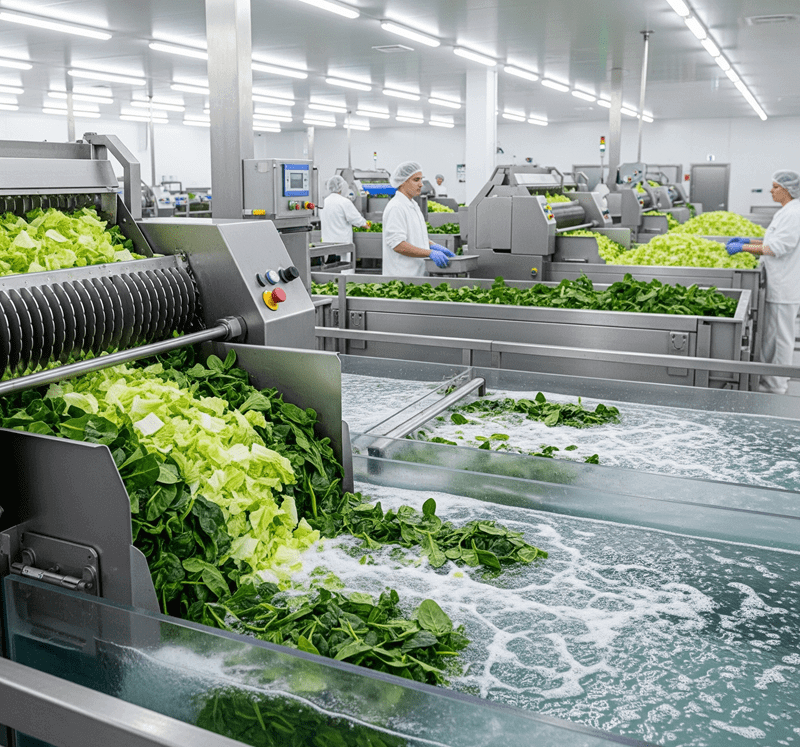
Once cleaned, vegetables move to the cutting and washing stage. Depending on the salad mix, leafy greens are shredded, chopped, or cut into bite-sized portions. Specialized washing tanks and flume systems then rinse the cut vegetables multiple times. Sanitizing agents, such as chlorine or ozone, are added at safe levels to kill harmful bacteria without affecting taste or nutrition. This stage is vital to extending the salad’s shelf life while ensuring it is safe for consumption.
-
Precision cutting machines maintain consistency in size.
-
Multiple water rinses for thorough cleaning.
-
Sanitizing wash to remove microbes.
-
Excess water removed via air-drying tunnels or centrifuges.
Mixing, Portioning, and Packaging
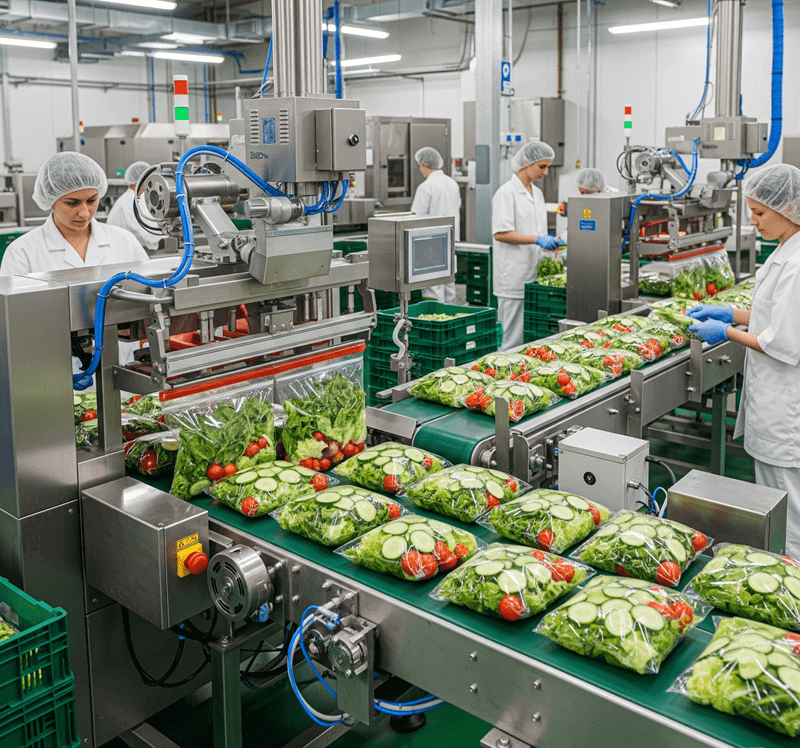
In this stage, the prepared vegetables are combined into pre-determined salad mixes. Recipes vary depending on customer demand, ranging from simple leafy greens to more elaborate mixes with carrots, cabbage, or herbs. Once mixed, automated weighing machines ensure accurate portion sizes for each bag. Packaging machines then fill and seal the salad bags in protective film that maintains freshness and prevents contamination. Modified atmosphere packaging (MAP) may also be used to control oxygen and carbon dioxide levels, slowing spoilage and extending shelf life.
-
Mixing stations blend different vegetables uniformly.
-
Portion control systems guarantee consistent weights.
-
Sealed bags protect from external contamination.
-
MAP technology enhances product longevity.

Mixing, Portioning, and Packaging
In this stage, the prepared vegetables are combined into pre-determined salad mixes. Recipes vary depending on customer demand, ranging from simple leafy greens to more elaborate mixes with carrots, cabbage, or herbs. Once mixed, automated weighing machines ensure accurate portion sizes for each bag. Packaging machines then fill and seal the salad bags in protective film that maintains freshness and prevents contamination. Modified atmosphere packaging (MAP) may also be used to control oxygen and carbon dioxide levels, slowing spoilage and extending shelf life.
-
Mixing stations blend different vegetables uniformly.
-
Portion control systems guarantee consistent weights.
-
Sealed bags protect from external contamination.
-
MAP technology enhances product longevity.
Storage, Distribution, and Delivery
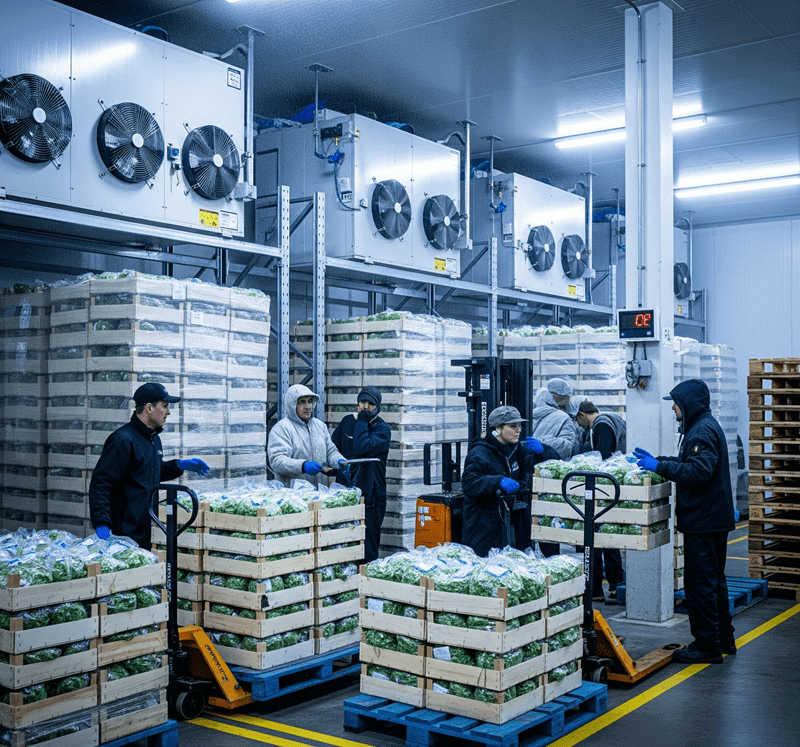
The final stage focuses on ensuring the salad bags reach consumers in peak condition. Once packaged, products are stored in temperature-controlled cold rooms to maintain crispness and freshness. A strict cold chain is followed throughout transportation and distribution, ensuring salads remain below recommended temperatures until they reach retailers. Delivery logistics are carefully managed to minimize delays, helping guarantee freshness and food safety. This last step is crucial for building trust with customers and maintaining the brand’s reputation for quality.
-
Cold storage at 0–4°C to preserve freshness.
-
Regular temperature checks during storage and transit.
-
Use of insulated vehicles for distribution.
-
Timely deliveries to retailers, restaurants, or supermarkets.